From Idea to Finished Film: The 2026 Film Production Journey
The New 2026 Filmmaking Operating System: How Human Creativity + AI Are Rewriting Every Stage of Production
Stewart Mugwiji
2/25/20265 min read
Every great movie begins with a simple spark—an idea, a real-life moment, or a single “what if.” Turning that spark into a finished film has always been a complex journey shaped by creative choices, logistics, and collaboration. While styles and budgets vary, the underlying process has remained largely the same.
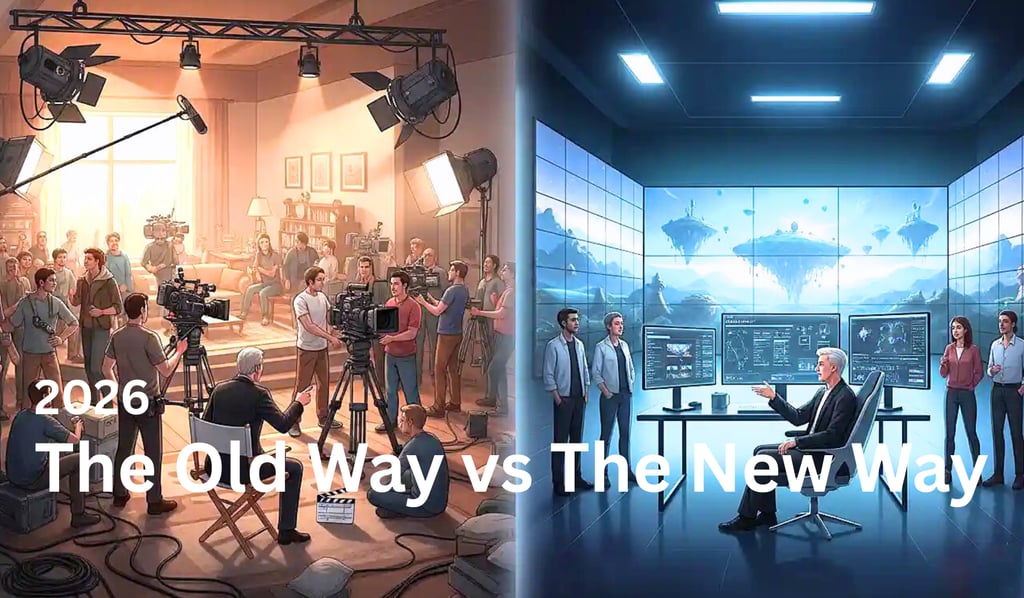
This article explains how a film idea becomes a finished movie, walking through each stage from concept to audience. Traditionally, the journey follows five stages: Development, Pre-Production, Production, Post-Production, and Distribution. Those stages still exist, but the system running beneath them has quietly upgraded.
In 2026, the most effective filmmakers operate on a hybrid engine. Artificial intelligence accelerates planning, analysis, and execution, while human creativity remains essential for emotion, taste, ethics, and authentic connection. What once took months of manual effort can now move faster than ever—making the human elements of storytelling more valuable, not less.
This shift is already happening across the industry. The path from idea to script, from footage to final cut, to audience remains the same—but the operating system powering that journey now combines human insight and AI intelligence, enabling filmmakers to produce movies more efficiently and creatively than ever.
What follows is a clear look at how the five classic stages of filmmaking now function as a seamless Human + AI operating system—and exactly how a film idea becomes a finished movie in today’s era.
1. Development: From Spark to Soulful Script
The old way: A writer stares at a blank page, drafts a treatment, receives notes, rewrites, pitches—and repeats the cycle.
The 2026 hybrid way: AI handles structure and possibility; humans provide the heartbeat.
A filmmaker feeds a logline or rough idea into tools like Squibler, Saga, or LTX Studio. Within minutes, multiple outlines, character arcs, dialogue variations, and story options emerge. AI can generate and compare versions of a scene, revealing which emotional beats resonate more strongly and where a reversal or shift could sharpen impact.
Then the human work begins. The creator curates the output—removing what feels generic and layering in lived experience, cultural nuance, and moral complexity. The result is a script that is structurally sound yet emotionally distinctive, aligning with what festivals and streamers increasingly reward.
The new producer’s mantra:
Let AI explore the map. Let the human choose the destination.
2. Pre-Production: Blueprinting the Dream at Lightning Speed
The old way: Months of spreadsheets, long location scouts, and endless back-and-forth on budgets and schedules.
The 2026 hybrid way: AI compresses weeks into days while humans lock in vision, trust, and creative alignment.
Once a script is locked, tools like LTX Studio and Saturation.io can instantly generate a full script breakdown, a preliminary budget with location and VFX estimates, and an optimized shooting schedule. AI-driven location tools add shortlists complete with lighting simulations and logistical data, reducing guesswork early.
Storyboarding accelerates too. Platforms such as Jenova and Saga convert scenes into consistent, cinematic panels in minutes, maintaining character continuity and visual tone. Directors and DPs then refine these boards collaboratively in real time.
What AI cannot replace remains essential: casting chemistry, crew selection built on trust and experience, and the ethical gut-check—does this story honor the people it represents? AI removes friction; humans safeguard the soul.
3. Production: Capturing Magic with Smart Assistance
The old way:
Long days, constant problem-solving, adrenaline, and the hope that everything aligns on set.
The 2026 hybrid way:
Real cameras, real actors, real sets—augmented by AI that quietly reduces friction and expands creative options.
On set, AI-assisted tools now monitor continuity, surface optimal takes in real time, and generate rapid previs overlays for complex blocking or VFX plates. Directors can test lighting setups and camera moves virtually before committing time and resources. Second-unit and insert shots can be quickly prototyped using generative video models such as Veo, Sora, and Runway, then refined or replaced in post-production.
Yet the core remains human: the silent exchange between director and actor, the unplanned improvisation no prompt can predict, and the collective energy of a crew in sync. AI keeps the machine running smoothly; humans generate the electricity.
4. Post-Production: Forging the Final Cut with Intelligent Partners
The old way: Months of manual assembly, cleanup, and endless rounds of notes.
The 2026 hybrid way: AI acts as an assistant editor, sound designer, and VFX collaborator—handling the heavy lifting so humans can focus on craft.
Modern suites like Adobe Premiere Pro with Sensei and DaVinci Resolve with the Neural Engine can auto-generate rough assemblies, suggest cuts based on pacing and emotion, and complete tasks such as masking, color balancing, and noise reduction in seconds. Generative tools help fill B-roll gaps, create temporary VFX or set extensions, and produce placeholder music that mirrors a scene’s emotional arc.
Sound receives the same upgrade. AI cleans dialogue, generates realistic effects from text prompts, and proposes spatial mixes. The editor and director then make the final decisions—the rhythm that feels alive, the silence that lands with impact, the color grade that carries the story’s soul.
This hybrid workflow has already become common at major festivals. By compressing weeks of technical labor into days, AI gives creatives more time to focus on what truly matters.
5. Distribution & Marketing: Reaching Audiences with Surgical Precision
The old way: Gut instinct, hope, and costly test screenings.
The 2026 hybrid way: Data and storytelling work together at every stage.
AI-driven tools now forecast optimal release windows, identify audience segments, and test multiple trailer or poster variations to determine what performs best. Real-time marketing dashboards track engagement as it happens, allowing teams to refine campaigns quickly. Generative systems can also produce localized or personalized teaser assets in minutes, expanding reach without inflating budgets.
Still, the most effective campaigns remain grounded in human truth: authentic director interviews, festival conversations, and stories that resonate because they were made with intention. AI helps films find their audience; humans earn the audience’s attention.
The Bottom Line: Your New Filmmaking OS Is Ready
The five stages haven’t disappeared — they’ve been supercharged. In 2026 the producers who thrive are the ones who treat AI as the most talented (and tireless) crew member they’ve ever hired, while refusing to let it make the final creative calls.
At Bengal Stripe Films we’ve already shifted our entire pipeline to this hybrid model. Projects that once took 18–24 months now move from idea to screen in 9–12, often at a fraction of the traditional cost — without sacrificing one ounce of heart or craft.
The tools will keep evolving. The principles won’t:
AI accelerates.
Humans illuminate.
Ready to run your next project on the 2026 Operating System?
Download our free Hybrid Filmmaking Toolkit (one-page checklist of the exact tools and prompts we use at each stage) and let’s talk about bringing your story to life — faster, smarter, and more beautifully than ever before.
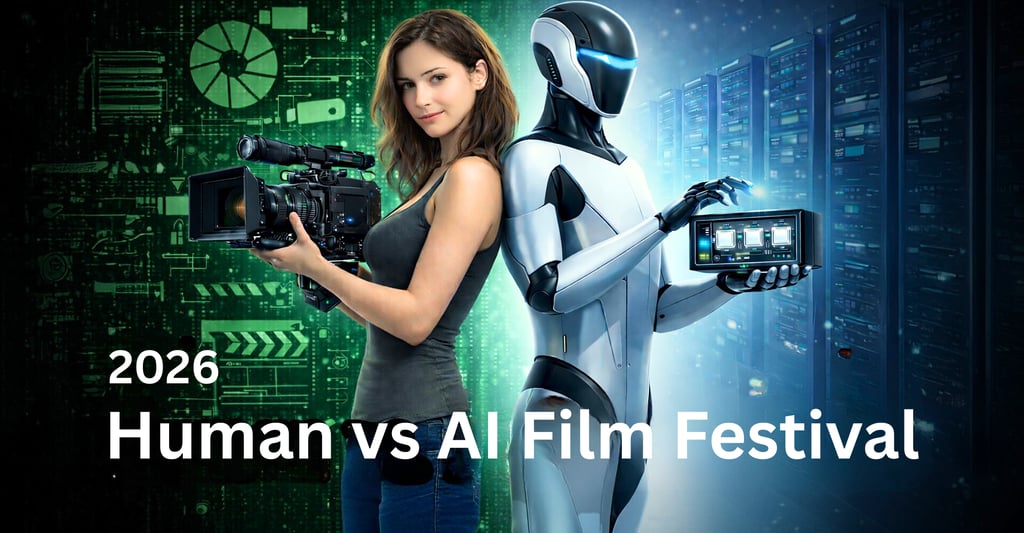
The future of filmmaking isn’t human vs. AI.
It’s human + AI.
And it’s already here.
What stage are you at with your project right now? Drop a comment or reach out — we’d love to help you build it on the new OS. 🎥